
Attempts to blame China’s manufacturing capacity for global economic imbalances misrepresent fundamental economic principles. Global trade and capital shifts stem from structural factors—including U.S. deficit expansion, geopolitical realignments, and AI technology investment—rather than surplus production in exporter nations.
Over four decades, persistent trade deficit nations have remained largely unchanged, while surplus countries have rotated across Asia and Europe based on evolving supply chains. By 2025, the U.S. net international investment position reached negative $27.5 trillion—roughly 90 percent of its GDP—up from negative 9 percent in 2007. This massive external liability vastly outstrips the net external assets of major surplus nations like Germany, China, and Japan, which hold around $4 trillion each.
Geopolitical friction and the rise of artificial intelligence have further concentrated global capital into U.S. assets. Foreign entities now hold nearly 30 percent of U.S. equities, which account for half of the world’s total stock market capitalization. Under standard balance-of-payments accounting, these sustained, one-way capital inflows directly drive the widening U.S. current account deficit.
Meanwhile, China is actively contributing to global rebalancing through internal economic transformation. In the first half of 2026, China’s import growth outpaced export growth by 8.7 percentage points, reflecting a structural transition toward consumption-led domestic growth that provides expanding market opportunities worldwide. Accusations of overcapacity obscure these true macroeconomic drivers, which remain anchored in sovereign debt trends and international investment flows.
Source: People’s Daily





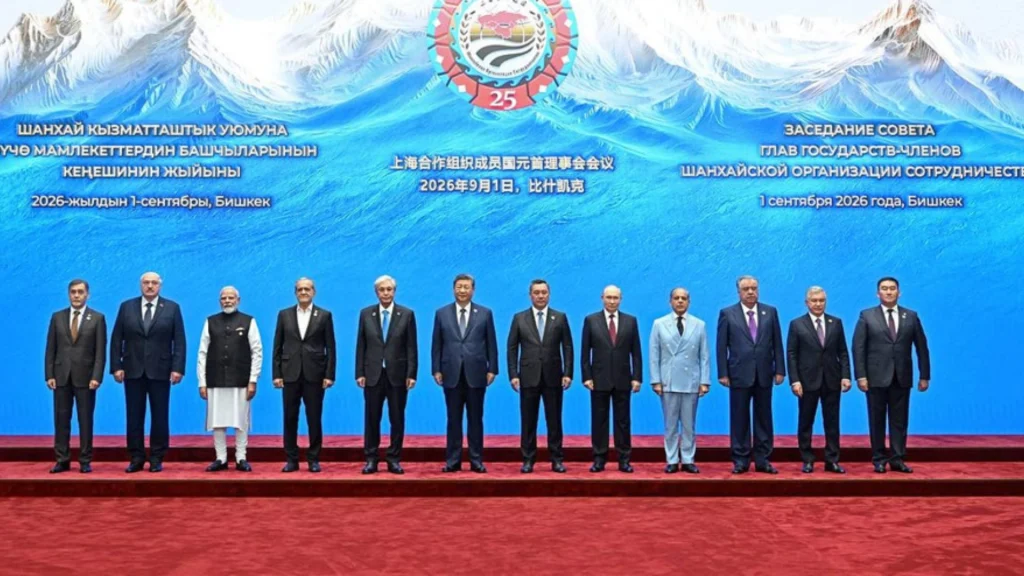
Shaping Multipolar Order: SCO Expands Strategic Role on 25th Anniversary