
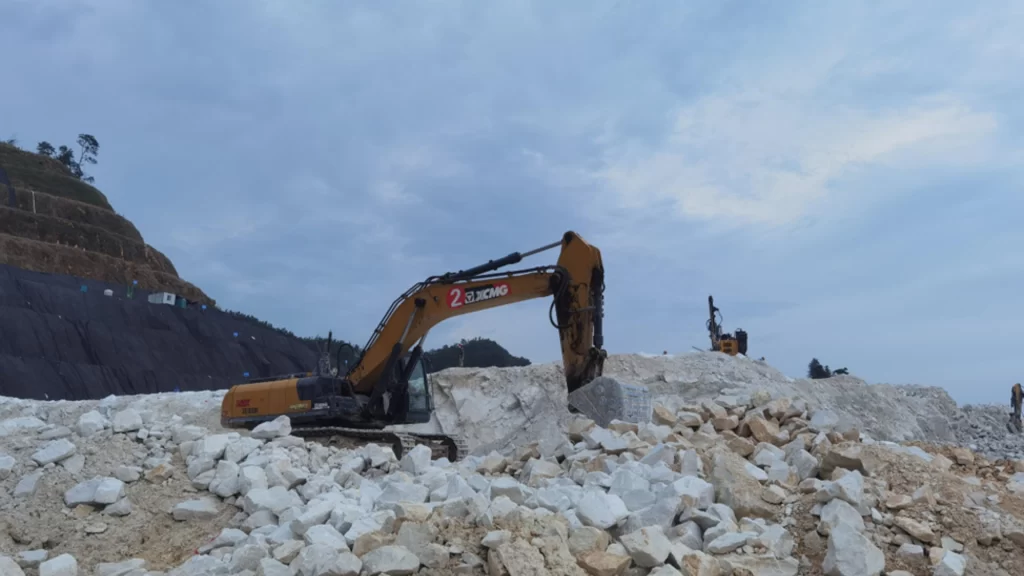
At the outskirts of a mining site in Nasarawa, young men gather around sacks of dull grey rocks, bargaining with a middleman who arrived before sunrise. The mineral, lithium, has quietly turned this once-sleepy community into a frontier of global demand.
Sadiq, an artisanal miner who switched from gold, says, “I didn’t even know what lithium was two years ago. Now buyers come every week. Sometimes they say it’s going abroad.”
Across Africa, lithium has emerged as one of the most strategic resources of the clean energy transition. Driven by demand for electric vehicle batteries and energy storage systems, global lithium demand is projected to more than quadruple by 2030, according to industry forecasts.
From Zimbabwe’s expanding exports to new projects in Namibia and the Democratic Republic of Congo, the continent is rapidly positioning itself as a key supplier in the evolving global energy market.
Nigeria is now stepping into that race, but doing so from behind.
A Resource with Rising Stakes
Nigeria’s lithium deposits, spread across Nasarawa, Kogi, Ekiti, and Kaduna, have drawn growing attention from investors and policymakers alike. Yet, much of the activity on the ground remains informal.
Industry estimates suggest that a significant portion of Nigeria’s lithium extraction is carried out by artisanal and small-scale miners, many operating outside formal licensing structures.
“We are seeing a rush without structure, and when that happens, the country loses revenue, oversight, and long-term value,” Ibrahim Lawal, a mining consultant based in Abuja, said.
The stakes are high. Despite its vast mineral potential, Nigeria’s solid minerals sector contributes less than 1% to GDP—a figure the government is now seeking to increase as part of its post-oil diversification strategy.
Recent policy signals point to a shift. Authorities have moved to curb the export of raw minerals and are encouraging local processing, with several lithium processing projects announced in Nasarawa and Kaduna in the past year.
Global Competition, Local Opportunity
Nigeria’s ambitions reflect a broader shift across Africa: moving from raw mineral exports to value-added processing.
Countries that once relied on shipping unprocessed resources are now introducing export restrictions and incentives for domestic refining. The logic is simple—capture more value at home.
Foreign investors, including multinational mining firms and battery supply chain players, are increasingly active in Nigeria’s lithium space, seeking long-term access to reserves.
But analysts warn that access alone is not enough.
Another energy economist who prefers anonymity said, “Lithium is only valuable if you move up the chain. Mining is the first step. Processing, refining, and eventually manufacturing, that’s where the real economic benefit lies.”
Infrastructure and Governance Gaps
Nigeria’s biggest challenge may not be resource availability, but execution.
In mining communities, weak enforcement continues to enable illegal extraction and informal trade. In parts of Nasarawa and Kogi, local officials acknowledge that lithium is often moved through unofficial channels, limiting government revenue.
“We see trucks leaving at night,” says Umar Saleh, a local community leader in Kokona. “There is activity, but not all of it is regulated.”
Infrastructure constraints further complicate progress. Poor road networks increase transport costs, while unreliable electricity supply poses a major hurdle for mineral processing, an energy-intensive activity critical to moving up the value chain.
Without addressing these structural gaps, experts warn that Nigeria could struggle to compete with more coordinated mining jurisdictions.
The Human Impact
For local communities, lithium is already reshaping economic life.
In Nasarawa, traders, transporters, and informal workers are benefiting from increased activity. But the gains are uneven and uncertain.
Aisha, a food vendor who sells food to miners, also mentioned that, “Before, we depended on farming. Now, lithium has brought business. But we don’t know if it will last.”
Environmental risks are also emerging. Unregulated mining can degrade land, pollute water sources, and undermine long-term livelihoods, especially in rural communities with limited oversight.
Without clear safeguards, the lithium boom could replicate patterns seen in other extractive sectors, where short-term profits outweigh sustainable development.
A Narrow Window
The global transition to clean energy is accelerating competition for critical minerals, with countries racing to secure stable lithium supply chains.
Prices have been volatile in recent years, but long-term demand remains strong, driven by electric mobility and grid-scale energy storage.
For Nigeria, the opportunity is real, but time-bound.
The country’s advantages are clear: a large domestic economy, proximity to export markets, and growing political attention on solid minerals. But turning these advantages into competitive strength will require speed and coordination.
“The window is open now,” says Lawal. “But it won’t stay open forever.”
Can Nigeria Capture the Value?
Nigeria can, but only if it moves decisively from potential to execution.
That means formalising artisanal mining, strengthening regulatory enforcement, investing in infrastructure, and ensuring that partnerships translate into real local value addition.
Otherwise, the country risks repeating a familiar pattern, exporting raw materials while others capture the higher-value gains.
Back in Nasarawa, Sadiq watches as a truck is loaded with freshly mined lithium.
“There is money in this work,” he says. “But we don’t control it.”
His words capture the stakes for Nigeria: not just joining Africa’s lithium boom, but determining who truly benefits from it.


Niger Delta Investment Drive Aims to Benefit From China’s New Zero-Tariffs for African Goods -Edebiri