
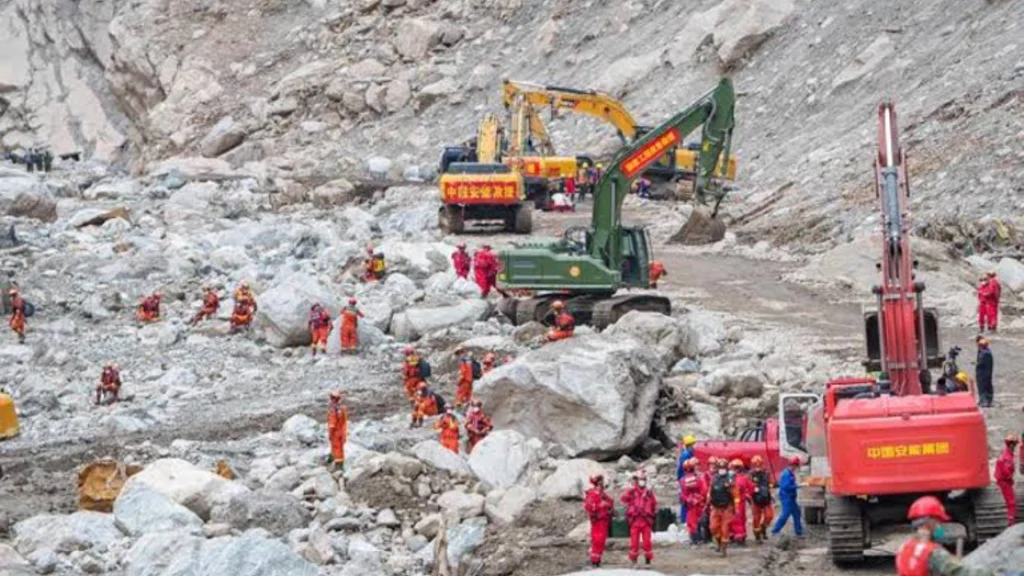
A devastating cascading disaster at the China-Nepal border was triggered when a glacier fractured at 5,200 meters altitude on Mount Langtang Lirung, sending an ice-rock avalanche 22 kilometers downstream to destroy 27 buildings at China’s Gyirong port within minutes, underscoring the accelerating impacts of global climate change.
Expert analysis highlights that climate anomalies are increasingly turning into complex, cross-border hazard chains, with global annual economic damage from natural disasters now reaching up to $2.3 trillion.
To tackle these systemic risks, experts advocate for three key international strategies: joint development of integrated space-air-ground monitoring systems for transboundary hazards, expanded technological and data sharing with developing nations, and unified policies that balance greenhouse gas mitigation with strengthened infrastructure resilience.
Source: People’s Daily




China Proposes Four-Point Framework for Middle East Security