Supporting the world’s tallest bridge, the Huajiang Grand Canyon Bridge in southwest China’s Guizhou province, relies on two massive main cables. Each cable is formed by nearly 40,000 individual steel wires, each measuring just 5.7 millimeters in diameter. These cables anchor the bridge, which spans a deep canyon often described as an “earth crack.”
As the backbone of any suspension bridge, the main cables for this demanding location required exceptional strength and durability. Remarkably, if the wires from both main cables were laid end to end, their combined length would circle the Earth’s equator twice.
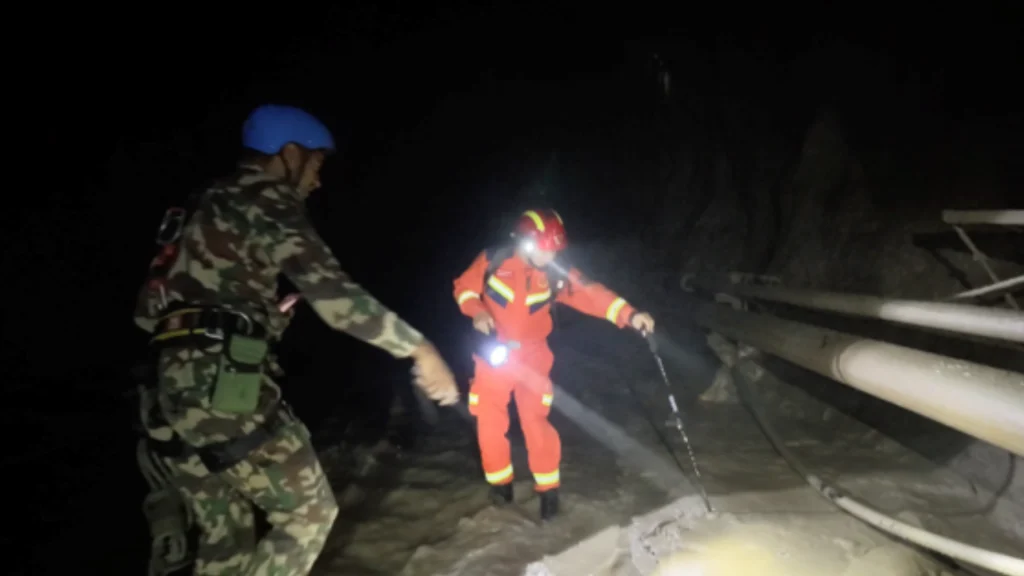
Ensuring the bridge’s longevity involves sophisticated monitoring. An intelligent control center features a large digital screen displaying real-time data from fiber-optic sensors embedded within the cables. These sensors continuously track temperature, humidity, and stress levels, providing 24/7 oversight of the structure’s health. Complementing this, maintenance teams conduct regular inspections of the bridge deck, joints, and structural components from locations dozens of kilometers away.
“Winds in the canyon are unpredictable, and temperature and humidity fluctuate significantly. In such a complex environment, the main cables must deliver ultra-high strength, excellent toughness, and strong corrosion resistance,” said Luo Zhi’an, general manager of the cable engineering company under Guizhou Steel Rope (Group) Co., Ltd.
The steel wires used in the bridge’s main cables have a tensile strength of up to 2,000 megapascals. This means each square millimeter of wire’s cross-section can withstand loads equivalent to approximately 0.2 metric tons — exceeding prevailing international standards by 7.5 percent. Achieving this strength while maintaining necessary toughness is a significant engineering challenge, as higher strength often reduces flexibility.
In 2022, Guizhou Steel Rope partnered with Guizhou University and Central South University to improve alloy material performance, achieving domestic production of high-performance cable materials for bridges.
“It was like refining a prescription; we tested different alloy combinations to find the optimal balance between strength and toughness,” Luo said. To cope with the canyon’s humid conditions, the team also developed a new zinc-aluminum-magnesium alloy coating and a post-plating-controlled cooling process, boosting corrosion resistance by 2.5 times. The innovations have secured nearly 10 invention patents.
Beyond robust materials, the cables are also “smart.” Engineers, in collaboration with Beijing Jiaotong University, pioneered a method of installing fiber grating sensors inside the main cables. Data collected by the sensors is transmitted to monitoring terminals in real time, effectively embedding “intelligent nerves” into the bridge and shifting maintenance from experience-based assessments to data-driven management.
Innovation continues to drive the company forward. Guizhou Steel Rope is now preparing to establish a provincial-level key laboratory for special metal wire materials, aiming to provide core technologies for future mega infrastructure projects.
The bridge has also become a new engine for regional development. As of January 28, it had received more than 1.3 million visitors and handled over 200,000 vehicle crossings, injecting sustained momentum into the local economy.
By Su Bin, Han Xin
Source: People’s Daily