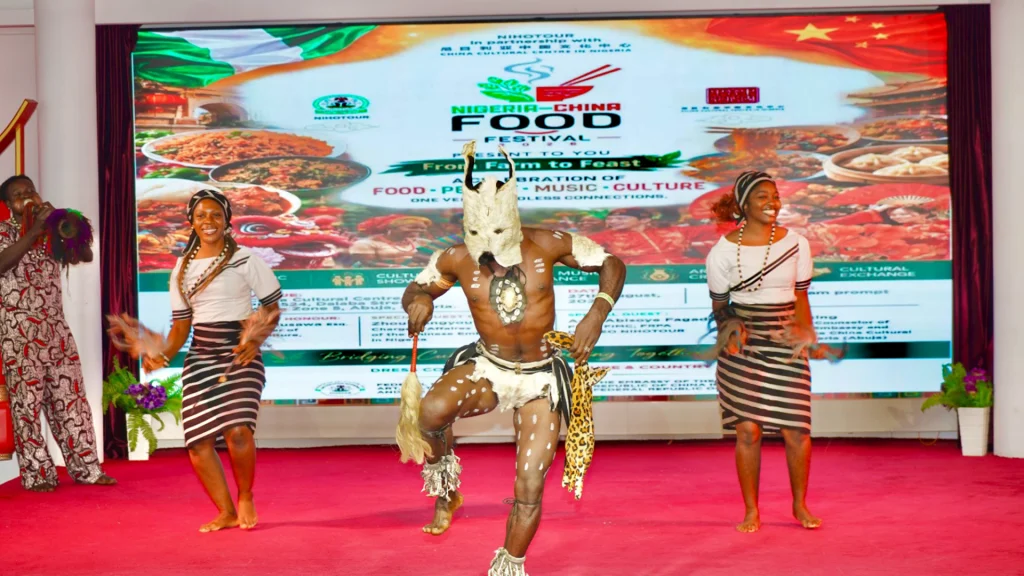
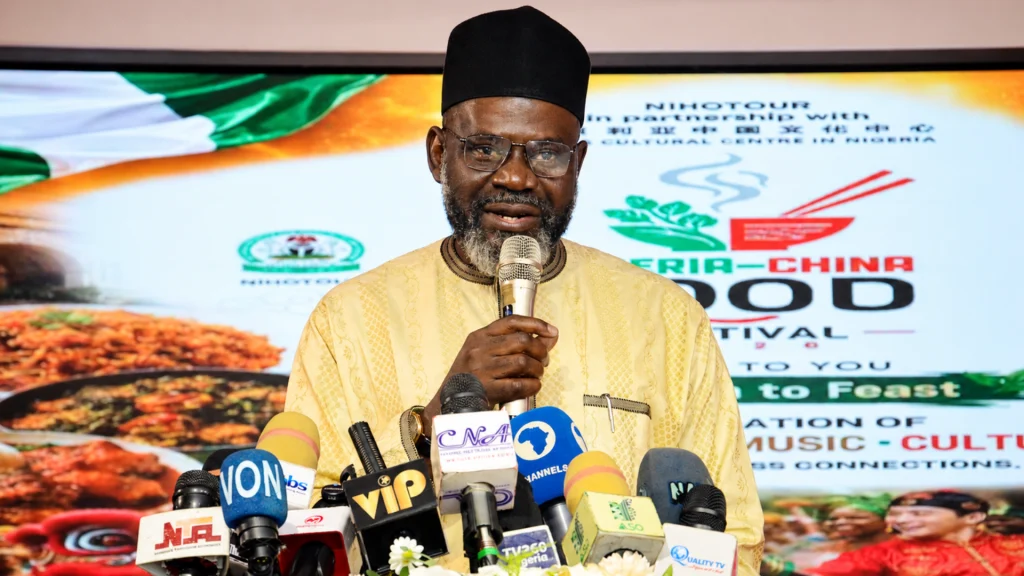
Nigeria and China maA speaker delivers remarks at the Nigeria-China Food Festival in Abuja.rked the 2026 Nigeria-China Food Festival in Abuja on August 27, using food and cultural performances to promote people-to-people exchanges as the two countries celebrate 55 years of diplomatic relations.
The festival, themed “From Farm to Feast,” was hosted by the China Cultural Centre in Abuja in collaboration with the National Institute for Hospitality and Tourism (NIHOTOUR), bringing together government officials, diplomats, tourism stakeholders and members of the two communities.
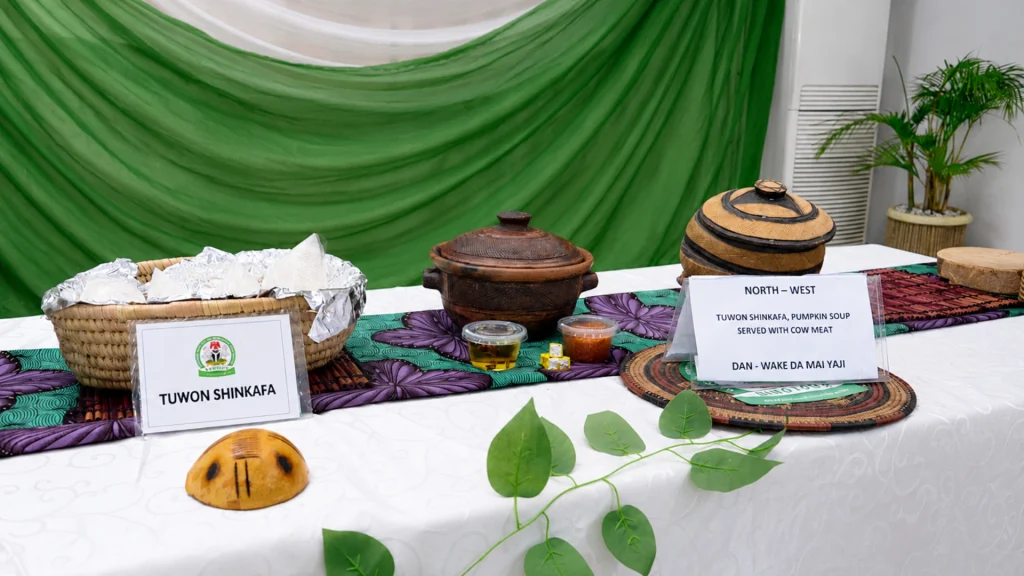
Guests sampled dishes representing different culinary traditions from both countries, with 14 Chinese dishes and 12 Nigerian dishes from the country’s six geopolitical zones presented during the festival.
The Nigerian selection included jollof rice, pounded yam, amala with ewedu soup, tuwo shinkafa and Ofada rice with ayamase, while the Chinese stands featured dishes including Kung Pao chicken, Xinjiang-style pilaf, Nanjing salted duck and guobaorou.
In remarks delivered on her behalf by the ministry’s Permanent Secretary, Abdulkarim Ozi Ibrahim, Minister of Arts, Culture, Tourism and the Creative Economy Hannatu Musa-Musawa said food was an important part of cultural identity and could also support livelihoods and economic activity.
“Food does not merely nourish the body; it tells stories, preserves heritage, creates livelihoods and brings people together. Every dish carries the history, creativity and identity of the people who prepare it,” Ibrahim said while reading the minister’s remarks.
Musawa said relations between Nigeria and China had expanded beyond traditional diplomacy to include trade, infrastructure, education, technology, culture and people-to-people exchanges.
She also pointed to growing cultural interaction between the two countries, citing Nigerian music, film and literature reaching audiences in China and increasing interest in Chinese language, arts and martial arts in Nigeria.
The minister said culture, tourism and the creative economy could contribute to economic growth and employment, while events such as the food festival could provide opportunities for chefs, food entrepreneurs, hospitality businesses and cultural practitioners to exchange knowledge and reach new audiences.
Zhou Hongyou, Chargé d’Affaires ad interim of the Chinese Embassy in Nigeria, described food as a way for people to better understand the history and culture of another country.
“Every dish carries a nation’s history, and every flavour tells a story of people’s love for their home and their lives,” Zhou said. “Today, we bring Chinese and Nigerian cuisines together. This is not just a feast for our taste buds — it is also a conversation and a meeting of our cultures.”
Zhou said China’s regional diversity had produced distinct culinary traditions and that food offered visitors a way to understand differences in geography, lifestyles and local culture.
He said the festival also reflected the broader relationship between Nigeria and China as the two countries mark 55 years of diplomatic ties.
“For more than 50 years, our countries have always respected and supported each other, and we have continued to deepen our mutually beneficial cooperation,” he said.
Aare Abisoye Fagade, Director-General of NIHOTOUR, said the festival also highlighted the potential of food tourism to create economic opportunities.
He said the theme, “From Farm to Feast,” reflected the links between agriculture, hospitality, cultural heritage and the wider tourism economy.
Fagade said Nigeria’s diverse culinary traditions — including rice dishes, soups, grains, seafood and indigenous delicacies — could form part of a stronger food-tourism industry if supported by training, standards, promotion and commercial development.
“Our task is to package, standardise, promote and commercialise this heritage while preserving its authenticity,” he said.
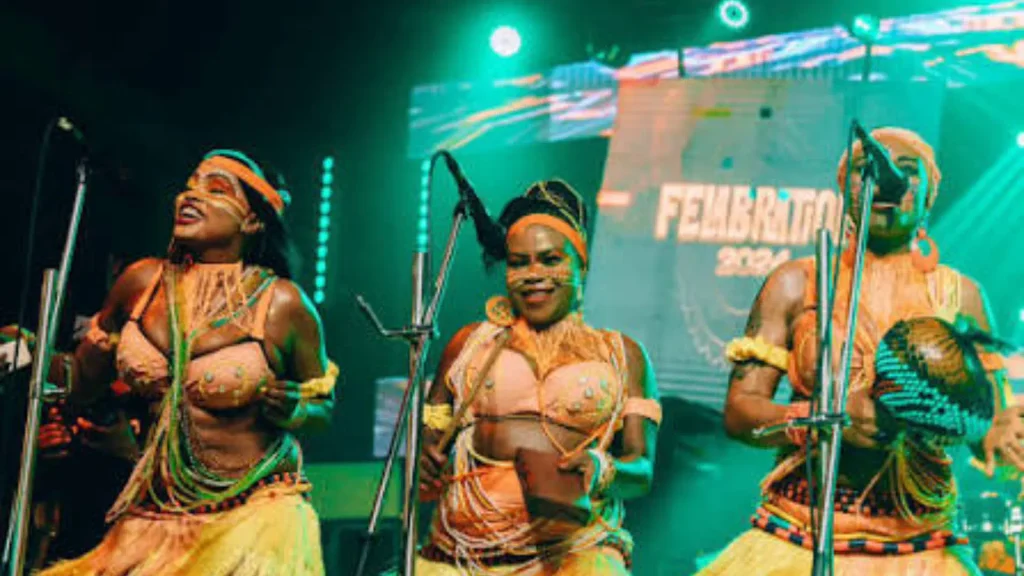
Beyond the food displays, the festival featured Nigerian and Chinese cultural performances, including appearances by the Nigerian National Troupe, Tiv dancers, Igbo musicians and performers from the China Cultural Centre.
The programme combined food, music and dance to present cultural traditions from both countries as Nigeria and China continue to expand exchanges beyond government and business ties.