
By Luo Shanshan
On Dec. 18, China launched island-wide special customs operations in the Hainan Free Trade Port (FTP). As of Nov. 10, China had extended its unilateral visa-exemption arrangements to 48 countries. In an era of rising global protectionism, why is China choosing to further expand voluntary opening up?
Let’s start with the Hainan FTP.
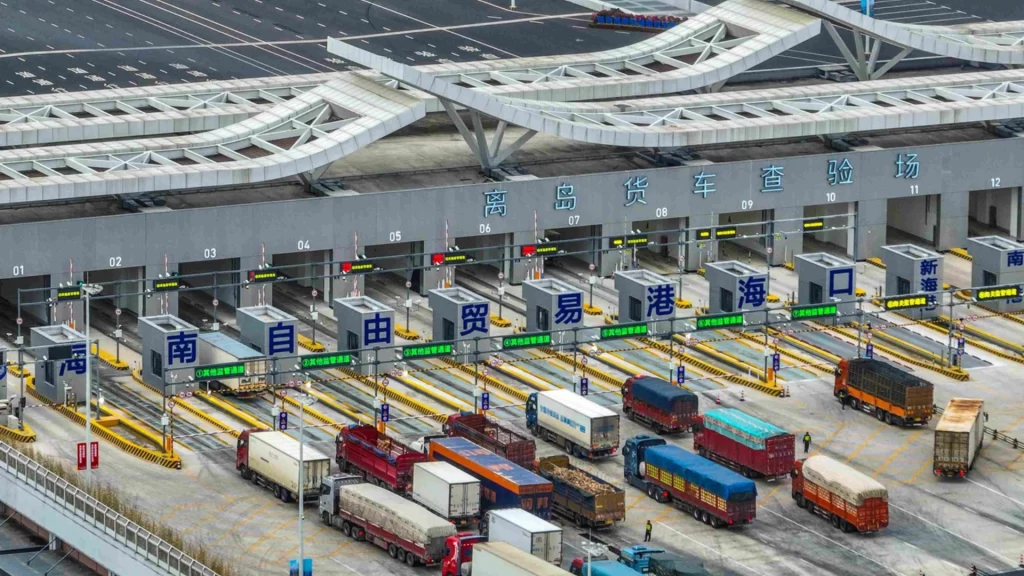
Starting Dec. 18, 2025, Hainan has launched island-wide special customs operations, allowing freer entry of overseas goods, expanding zero-tariff coverage, and introducing more business-friendly measures. This initiative will significantly ease the entry and exit of people, goods, capital, and data across Hainan, enhancing its position as a hub of global exchange.
What has expanded opening up brought?
The results are evident in Hainan’s development. Since the release of an overall plan for the development of the Hainan FTP in June 2020, Hainan has attracted 102.5 billion yuan ($14.56 billion) in foreign investment, with an average annual growth rate of 14.6 percent. Additionally, trade in goods and services increased by average rates of 31.3 percent and 32.3 percent, respectively, while the province’s economic openness reached 35 percent. With the formal launch of island-wide special customs operations, Hainan is well-positioned to seize new opportunities for growth and global integration.
Looking back at China’s reform and opening-up process, the use of opening up to drive reform and development has been a key factor behind the country’s continued progress and achievements.
By the end of 2024, the number of foreign-funded companies in China had grown to nearly 1.24 million, with almost 700,000 foreign trade companies engaging in import and export activities. Foreign trade and foreign investment have directly or indirectly created jobs for more than 200 million people. In November this year, China’s actual foreign direct investment jumped 26.1 percent year on year.
In today’s increasingly turbulent and complex international environment, where protectionist tendencies are on the rise, expanding opening up has become more challenging. This requires a dynamic balance between opening up and ensuring security. The key to achieving this balance lies in China’s approach to voluntary opening up.
Voluntary opening up is a defining feature of China’s high-level opening up in the new era. It is an approach driven by China’s own development needs while also fostering constructive interaction with the rest of the world. This method involves a measured, well-defined, and multi-tiered approach, tailored to the specific needs of different industries and sectors. Central to voluntary opening up is the notion of initiating openness on China’s own terms, emphasizing cooperation and mutually beneficial outcomes.
Voluntary opening up is neither driven solely by reciprocity nor by external pressure. Rather, it is rooted in China’s modernization efforts and founded on principles of independence and self-reliance.
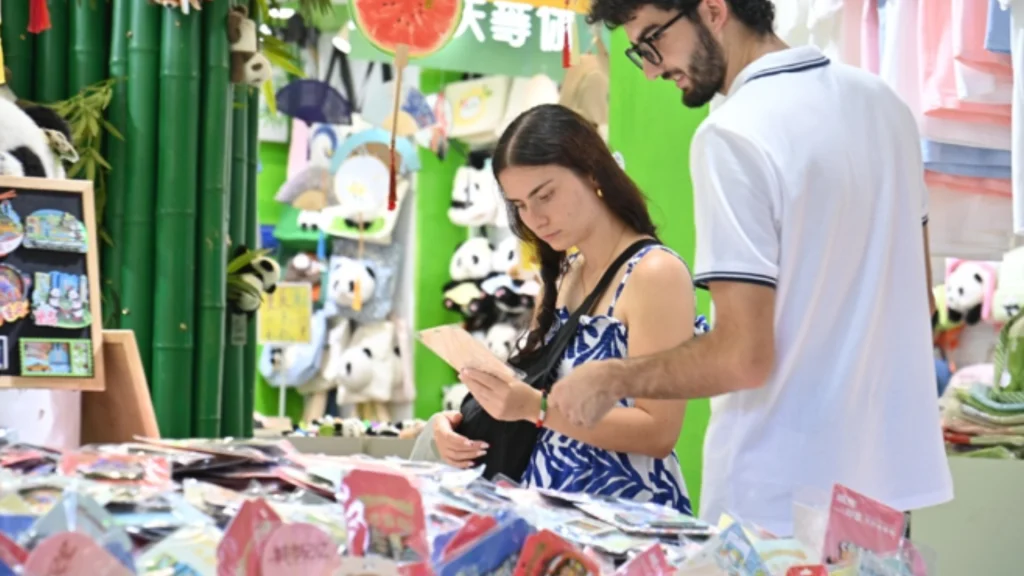
China has enacted a series of voluntary opening-up policies, including the promotion of high-quality Belt and Road cooperation, the expansion of pilot free trade zones, and the establishment of platforms such as the China International Import Expo. Furthermore, China has granted zero-tariff treatment for 100 percent of tariff lines to all least developed countries with which it has diplomatic relations, while steadily expanding the list of countries eligible for unilateral visa-free entry.
These efforts not only support China’s domestic development but also bring tangible benefits to the wider world.
The level of opening up is closely linked to the depth of reform and the stage of economic development, with each reinforcing the other in a virtuous cycle. Deeper reform and higher-quality development enhance a country’s capacity to open up further, while broader opening up drives continued reform and fosters better development outcomes.
Today, China is home to the world’s largest middle-income group, offering vast market potential and growth prospects. It has a complete industrial system with more than 200 mature industrial clusters, as well as a large pool of highly skilled workers and entrepreneurs.
These advantages provide China with substantial capacity to engage proactively with international markets and shape a favorable external environment, thereby gaining a competitive edge in economic development and international competition.
Expanding voluntary opening up serves a dual purpose: domestically, it strengthens China’s capacity to harness opening up as a driver of reform and development; internationally, it enhances China’s role in promoting global cooperation and win-win outcomes. This strategic approach benefits both China and the broader international community.
Source: People’s Daily



Shaping Multipolar Order: SCO Expands Strategic Role on 25th Anniversary