
By Gu Yekai
As a new-generation open-source operating system independently developed in China, OpenAtom OpenHarmony, or OpenHarmony, is steadily extending from consumer applications to a wide range of industrial and public-service scenarios.
By integrating software with real-world needs, it is laying a solid digital foundation for industrial upgrading and the improvement of people’s livelihoods.
At the command and dispatch center of the Chengde branch of Hebei Expressway Group Limited in Chengde, north China’s Hebei province, an on-duty engineer tapped on a screen, and the operating status of ventilation fans, lighting systems, and signal lights inside a tunnel several kilometers away instantly came into view.
“Based on OpenHarmony, we have developed the ‘JiHong’ smart tunnel solution, which has significantly enhanced the linkage capability of electromechanical systems, improved accident response efficiency, and strengthened tunnel traffic safety,” said Zhang Xiaolei, director of the electromechanical management center of the Chengde branch.
Since it was officially open-sourced in 2020, OpenHarmony has seen its codebase expand from 7 million lines to 130 million lines, attracting nearly 10,000 contributors. It has fostered a vast ecosystem spanning finance, education, health care, industry, transportation, and other sectors, energizing the development of China’s basic software industry and opening up new possibilities for both production and daily life.
During a physical education class at Yali Lugu Middle School in Changsha, central China’s Hunan province, students worked up a sweat on the sports field while the teacher monitored their heart rates and physical performance in real time on a tablet.
“If a student shows abnormal heart rate readings or other issues, I receive an alert immediately,” a teacher said. Leveraging the low-latency data transmission capabilities of OpenHarmony, tablets are seamlessly connected with students’ wearable devices such as fitness bands, which offer a more intelligent way to ensure their healthy development.
In the wards of the People’s Hospital of Chongqing Liangjiang New Area, southwest China’s Chongqing municipality, patients can adjust lighting, draw curtains, and view real-time vital signs with a simple touch on an interactive bedside screen. An intelligent infusion monitoring system synchronizes infusion progress across beds, while millimeter-wave radar and wearable devices simultaneously track heart rates and respiration. Smart ward solutions built on OpenHarmony have already been deployed in more than 20 hospitals, further enhancing patient-centered care.
From early exploration to a flourishing ecosystem, OpenHarmony is bringing technology closer to everyday life, optimizing user experiences in education, health care, and other fields, and adding a human touch to technological innovation.
Shaanxi Coal and Chemical Industry Group in northwest China’s Shaanxi province has developed a mining system based on OpenHarmony, which balances production safety with operational efficiency, significantly boosting coal mining productivity.
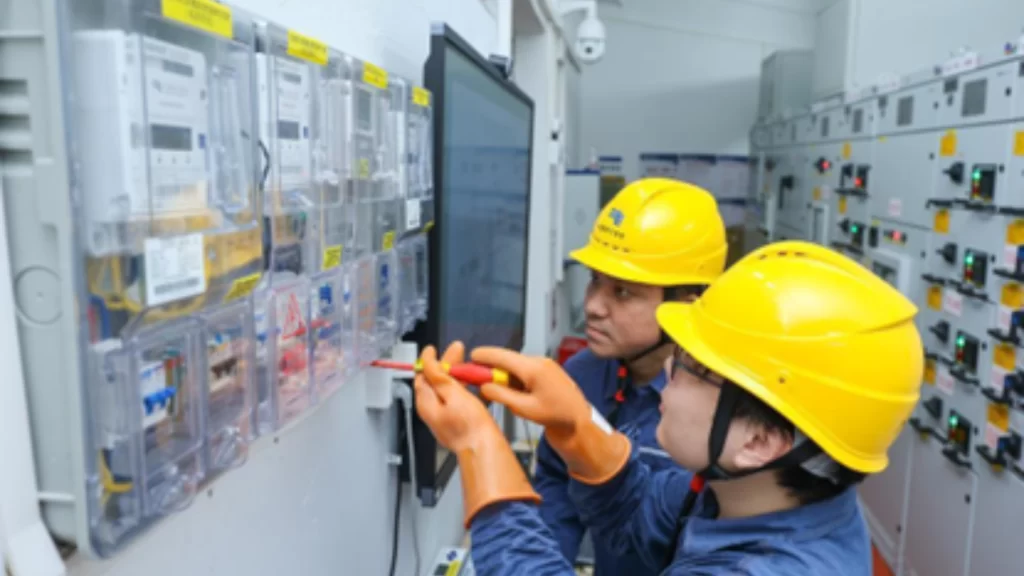
At China Southern Power Grid, an Internet of Things operating system empowered by OpenHarmony has freed on-site maintenance personnel from carrying multiple terminals; equipped with only a mobile phone and basic tools, they can now manage operations across entire regions through a single system.
Represented by OpenHarmony, China’s domestically developed root technologies are embracing open-source and open collaboration.
By breaking down barriers caused by heterogeneous devices and fragmented data, they are building a foundational platform for the digital and intelligent transformation of industries.
Enterprises benefit from lower maintenance costs and higher efficiency, while unified technical standards are promoting coordinated upgrading across industrial chains.
Scientific and technological innovation must be firmly grounded in real-world needs while also positioning itself for future frontiers.
The Dalian-1 Lianli satellite, designed and developed by Dalian University of Technology in northeast China’s Liaoning province, is the province’s first satellite. By integrating the HarmonyOS with domestically produced hardware, the project has achieved a high degree of synergy between software and hardware in satellite development.
This has created a new solution for spacecraft operating systems, lowered innovation thresholds, and driven coordinated upgrading across the entire industrial chain from core components to complete satellite manufacturing, significantly improving system performance and reliability.
So far, multiple satellites have adopted this technological framework, and a vibrant ecosystem of independently developed aerospace software is beginning to take shape.
The transition from digitalization to intelligent digitalization reflects the deep integration of data and intelligent technology. As a new round of scientific and technological revolution and industrial transformation accelerates, independently controllable foundations featuring intelligent digitalization are expected to provide the underlying logic for an intelligent world — one that combines security with compatibility.
Source: People’s Daily