
By Liu Yang
China’s film industry saw animated features deliver exceptional results in 2025, with nationwide box office revenue reaching 51.832 billion yuan (about $7.37 billion). Animation alone contributed over 25 billion yuan — nearly half of the market — signaling a major industry shift.
Ne Zha 2, a fantasy adventure film based on the Chinese mythological character Ne Zha, stood out in particular. With a global box office of nearly 15.95 billion yuan, it became the highest-grossing animated film in global cinema history. It also marked the first Asian film ever to enter the global top 10 in box-office rankings, placing fifth on the all-time global box-office list.
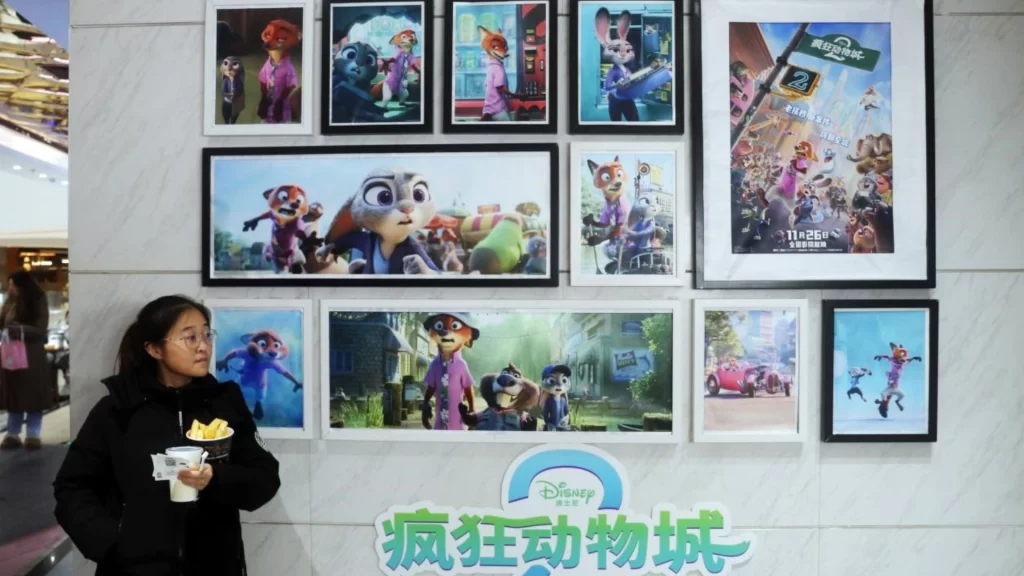
Other animated titles also resonated strongly with Chinese audiences. Domestic productions like Nobody and international releases such as Zootopia 2 achieved significant commercial success.
Yu Zhou, president of Light Chaser Animation, a Beijing-based producer of animated films, noted that in China’s domestic animation market in 2025, blockbusters and top-tier titles played an especially pronounced role in driving overall performance. Early in the year, Ne Zha 2 attracted 324 million cinema visits. Many viewers watched the film multiple times, while a significant number were “new audiences” who had not visited movie theaters for years.
“Ne Zha 2 sparked strong audience interest in animated films and helped lift the performance of the entire animation sector throughout 2025,” Yu said.
“Chinese audiences are becoming increasingly interested in animated films,” said Peng Kan, a member of the theoretical and critical committee of the China Film Association.
Statistics illustrate this trend clearly. From 2011 to 2018, animated films accounted for around 10 percent of China’s annual box office. Between 2019 and 2024, the figure rose to roughly 14 percent. By 2025, the share had climbed to nearly 50 percent.
This shift aligns with demographic changes. Moviegoers born in the 1990s and 2000s now dominate cinema attendance. “Unlike earlier generations, they grew up with greater exposure to animation and show stronger acceptance,” Yu explained.
An intellectual property (IP) adaptation strategy continues to fuel market growth. Among the animated films released in 2025, both domestic and international, the vast majority were adaptations of existing IPs.
Ne Zha 2, Zootopia 2, Boonie Bears: Future Reborn, and The Legend of Hei 2 all had earlier installments. Nobody was adapted from the animated anthology series Yao-Chinese Folktales, while Curious Tales of a Temple drew on a classic work of Chinese literature.
“Animation possesses unique advantages for IP development,” Peng observed. “It enables multidimensional expansion through sequels, merchandise, and cross-brand collaborations.
Recent co-branded products launched during film releases have not only enhanced films’ visibility and influence, but also generated higher box-office returns and ancillary revenue. This, in turn, helps create a stronger cinema-going atmosphere, build user loyalty, and expand consumption scenarios.
Industry insiders widely agree that the growing popularity of domestic animated films ultimately stems from improvements in quality. On the one hand, stories are becoming more diverse. Today’s domestic animated films range from adaptations of traditional Chinese mythology, such as the Ne Zha and White Snake series, to works inspired by classical literature like Chang’an and the Strange Tales from a Chinese Studio series. Others focus on contemporary life, including the I Am What I Am series, the allegorical Nobody, and family-friendly movies such as the Boonie Bears series.
On the other hand, in terms of animation technology, China’s animated film production has now largely aligned with international advanced standards.
From an industrial perspective, investment in domestic animated films has become increasingly clustered. Production entities are more concentrated than before. “The growing concentration of investment means a more complete industrial chain and stronger risk resistance for animation companies,” Peng said. “This is of great significance for the future development of China’s animated film industry.
At the same time, China became the world’s largest single market for Zootopia 2. This not only underscores China’s strong capacity as the world’s second-largest film market but also reflects the openness and inclusiveness of China’s film market and industry for high-quality imported films, serving as a microcosm of China’s continued commitment to reform and opening up.
“Animated films possess unique expressive strengths and distinct advantages in cultural communication,” Yu said. “As Chinese animated films continue to draw primarily on Chinese culture, creators need to consider how to explore shared human emotions through storytelling, so that audiences from different cultural backgrounds can understand and appreciate these stories, thereby helping Chinese animation better step onto the global stage.
Source: People’s Daily



Shaping Multipolar Order: SCO Expands Strategic Role on 25th Anniversary