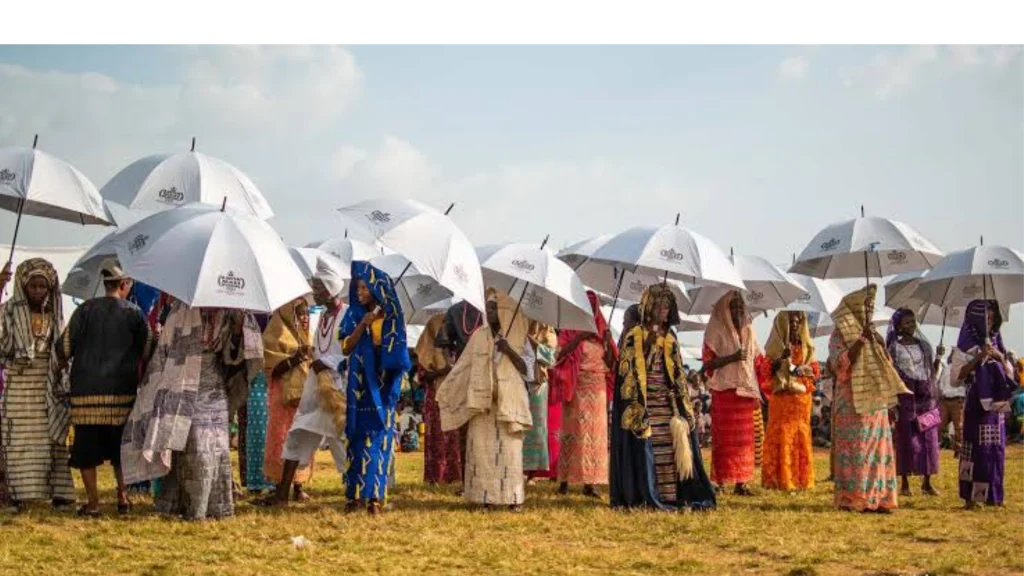
Every year, women in a small Nigerian town marry on the same day, honoring a centuries-old tradition said to have begun with a mysterious goddess.
On October 30, the town of Shao in Kwara State, north-central Nigeria, will once again celebrate the Awon Festival, bringing families together for a mass wedding ceremony that has become a defining part of the community’s cultural identity.
The annual celebration, rooted in Yoruba tradition, centres on an extraordinary legend: a one-breasted goddess whose encounter with a hunter is believed to have given rise to a wedding custom passed down through generations.
According to local folklore, the goddess, known as Awon, appeared before Olarele Arinadegbo, a hunter associated with the founding of Shao, while he was drinking from a stream. Claiming ownership of the water, she asked to be taken to the town’s traditional ruler.
The legend tells of her subsequent marriage to the hunter and her promise to protect the community from war and misfortune. Before mysteriously disappearing, she instructed the people of Shao to set aside a day each year for the marriage of eligible young women, linking the tradition to the town’s continued peace and prosperity.
Centuries later, the custom remains an important part of life in Shao, where marriage is celebrated not simply as a union between two individuals but as an occasion that brings the wider community together.
Elder Abel Awonshola, Chairman of the Awon Mass Wedding Festival Committee, announced the date of this year’s celebration on October 23 at the Awon shrine in Shao.
Organisers said the 2026 festival will include the distribution of essential food supplies to participating brides, reflecting a longstanding tradition of communal support for newly married couples.
The initiative highlights one of the festival’s distinctive features: the role of the community in supporting marriage and family life, beyond the responsibilities of individual households.
Unlike conventional weddings organised separately by families, the Awon Festival brings multiple couples together in a shared cultural ceremony. The occasion also attracts traditional leaders, residents living outside Shao, visitors and cultural enthusiasts.
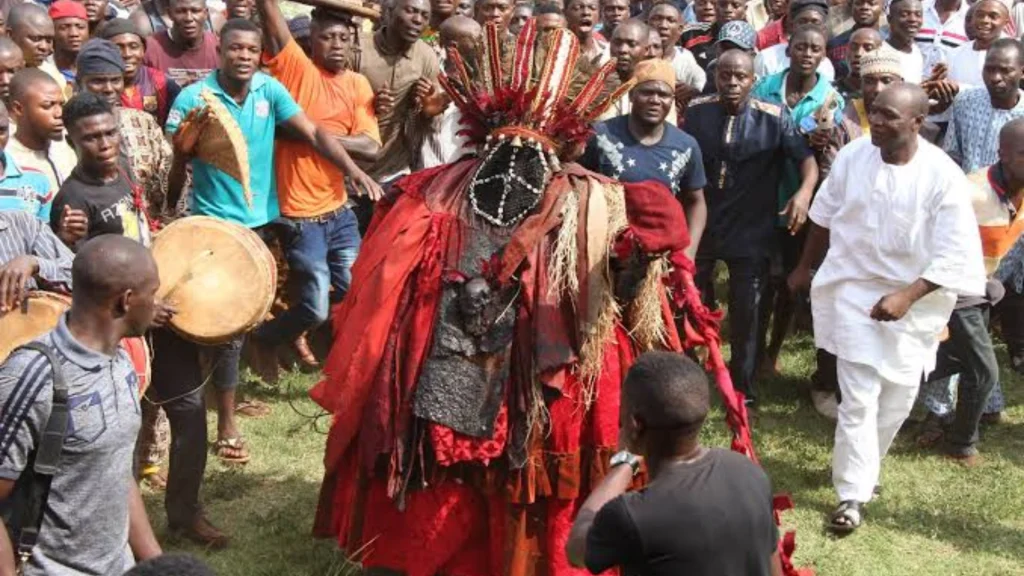
The celebrations are expected to feature a bridal procession, a traditional hunters’ dance, cultural performances, blessings and the mass wedding ceremony itself. Nigerian musician Alhaji Tokunbo Abefe is also expected to perform.
The festival carries deep significance for the town’s traditional leadership. Speaking during the 2025 celebration, the Ibo of Shao, Bolaji Olatunde, described Awon as a cornerstone of the kingdom’s cultural identity and one of Kwara State’s most cherished traditional festivals.
The Alawon of Shao Kingdom, Kolawole Adagbe Omomeji, has also recalled the legend of the female deity who disappeared into the earth, leaving behind a calabash that became a symbol associated with her remembrance and worship.
Although the festival is rooted in traditional beliefs, its celebration has developed into a wider community occasion, bringing together people across religious and generational lines.
For Shao, the annual mass wedding is more than a ceremonial remembrance of an ancient legend. It is a living tradition through which families celebrate new beginnings, the community expresses solidarity, and younger generations maintain a connection with their cultural heritage.
When the brides gather on October 30, they will be taking part in a ceremony that connects present-day marriages with a story their community has preserved for centuries.