
The 2026 World Sàngó Festival is continuing in the ancient city of Oyo in southwestern Nigeria, bringing a major expression of Yoruba intangible cultural heritage into focus ahead of the festival’s scheduled conclusion on Aug. 15. Oyo State tourism channels list this year’s celebration as running from Aug. 6 to 15.
The annual festival carries international heritage significance following the inscription of Sango Festival, Oyo on UNESCO’s Representative List of the Intangible Cultural Heritage of Humanity in 2023. The decision placed the practice among cultural traditions recognized for their importance to communities and for the knowledge, skills and practices transmitted between generations.
According to UNESCO, the Sango Festival marks the beginning of the Yoruba traditional New Year in August and is closely connected to the social, religious, cultural and political institutions of the Oyo community. The observance commemorates Tella-Oko, identified in UNESCO’s documentation as the third Alaafin of the Oyo Empire and associated in Yoruba tradition with Sango.
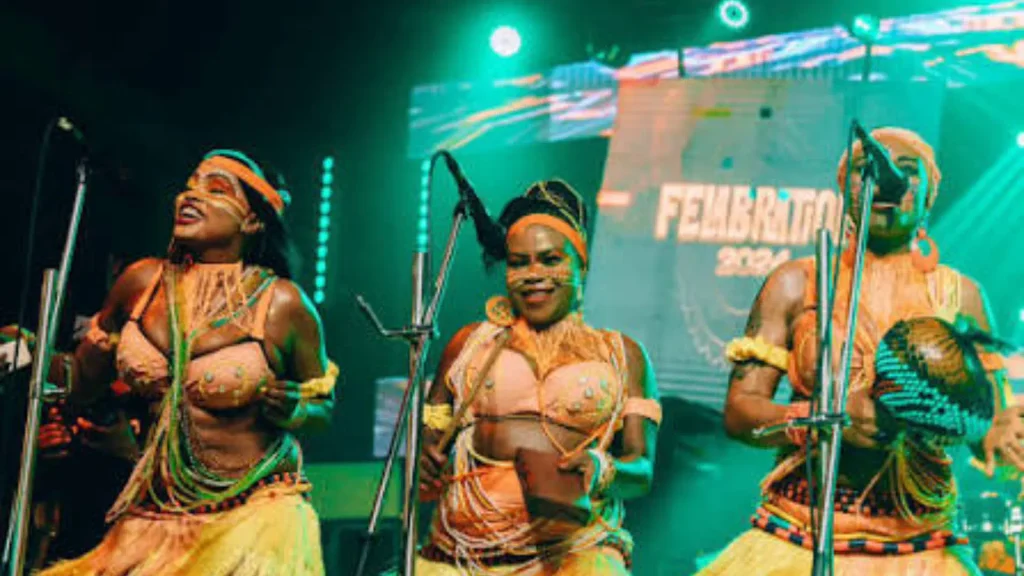
The festival encompasses a range of rites and cultural expressions, including chanting, storytelling, drumming and dancing. UNESCO’s assessment emphasizes that the festival is not simply a public spectacle but a living cultural practice through which knowledge and skills are passed between generations. Children learn aspects of the tradition by observing elders and participating in community activities, while some specialized knowledge is transmitted through apprenticeship.
That transmission was one of the factors considered when UNESCO approved Nigeria’s nomination. The organization said the festival serves a unifying role within the Oyo community and provides a means through which participants express shared identity and maintain connections with inherited cultural traditions.
Nigeria had previously included the festival in national and local inventories of intangible cultural heritage. UNESCO’s decision also noted safeguarding measures involving documentation, research, education, transmission of knowledge and protection of sites and objects connected with the practice.
The international recognition has subsequently become part of the festival’s public profile. In August 2025, the Oyo State Government received the UNESCO Intangible Cultural Heritage certificate associated with the inscription, according to reports by Punch and The Guardian.
Nigeria’s federal cultural authorities have also linked the festival to broader efforts to safeguard the country’s cultural heritage. At the 2024 World Sango Festival, federal officials stressed the importance of protecting cultural practices and strengthening their contribution to national identity and sustainable cultural development, according to the News Agency of Nigeria.
The festival’s UNESCO status is particularly significant because the organization’s recognition focuses on intangible heritage—practices, knowledge and forms of cultural expression maintained by communities—rather than simply monuments or physical sites. In the Sango Festival nomination, UNESCO highlighted community participation and the continued transmission of cultural knowledge as central to the element’s safeguarding.
The documentation also stresses that safeguarding must respect customary practices. UNESCO noted that access to certain spaces and aspects of the tradition is governed by community rules, including restrictions surrounding particular shrines. That distinction is important as festivals increasingly attract photographers, tourists, researchers and digital audiences beyond their originating communities.
For cultural institutions, the festival therefore presents two connected stories: the continuation of a major Yoruba cultural tradition and the challenge of ensuring that greater public visibility does not detach that tradition from the community practices that sustain it.
With the 2026 programme continuing through Aug. 15, attention in Oyo is now turning toward the closing phase of this year’s celebration. Beyond the ceremonies themselves, the festival remains a prominent example of how a living Nigerian tradition is being maintained locally while gaining wider international recognition through UNESCO’s cultural heritage framework.



Shaping Multipolar Order: SCO Expands Strategic Role on 25th Anniversary