
Communities across Anambra State are beginning their 2026 New Yam Festival celebrations, opening a season of harvest rites, traditional ceremonies and cultural performances that will continue across different towns through August and September.
The Anambra State Government said in an August 8 update that traditional rulers, village leaders, age-grade associations, women and youth groups, cultural troupes and organising committees were preparing for this year’s celebrations. Communities including Abatete, Omor, Uga, Nimo, Ogbunka, Umuoba-Anam, Igboukwu, Ezi Agulu-otu, Ikenga, Oba, Utuh, Okija, Awkuzu and several others have announced programmes, while other communities are still finalising their schedules.
Rather than being observed on a single statewide date, the New Yam Festival takes place at different times according to the traditions and calendars of individual communities. In Anambra, the celebrations generally fall between August and September and are known by names including Iri Ji, Iwa Ji, Ihejioku and Afiaolu.
At the centre of the observance is the arrival of the new yam harvest.
Traditionally, a community’s first ceremonial consumption of the new crop is led by a traditional ruler or another designated custodian of culture. The ceremony marks the point at which new yam is formally accepted for consumption and is commonly accompanied by thanksgiving and traditional prayers connected with the harvest and the welfare of the community.
Nigeria’s National Institute for Cultural Orientation documents a similar tradition in Nnewi, where the annual Afiaolu Festival is held around August to mark the beginning of the yam harvest season. Its programme traditionally includes the Iwa Ji ceremony, masquerade displays, music and dance.
The 2026 season has already begun in some parts of the state. Enugwu-Ukwu, in Njikoka Local Government Area, held its Ikpo Ji Festival on July 30, an observance associated locally with the formal introduction of newly harvested yam into the community’s market.
Across communities, New Yam celebrations often extend beyond the ceremonial eating of the crop.
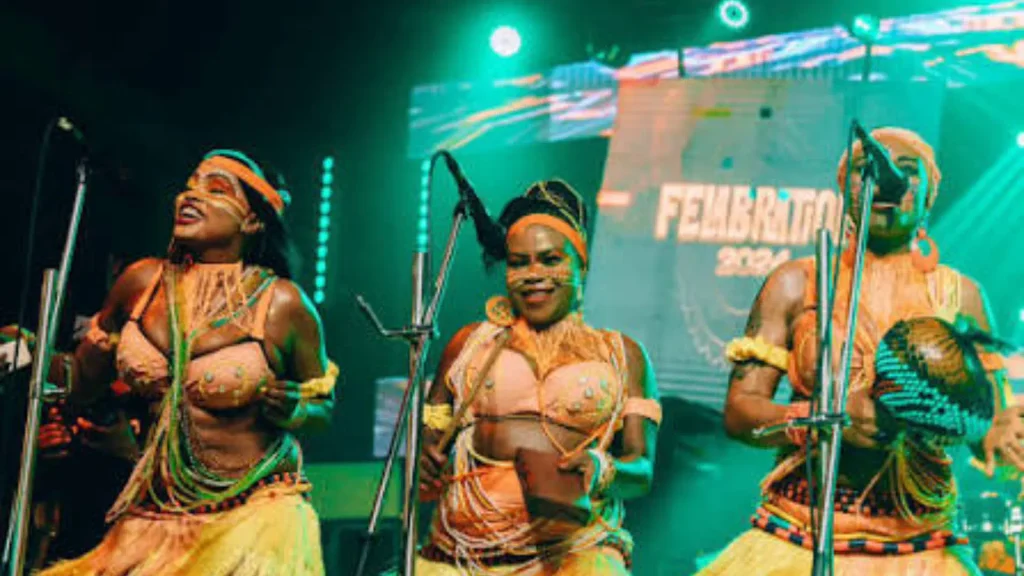
According to the Anambra State Government, programmes may include royal processions, masquerade displays, cultural dancing, traditional music and local cuisine. Some communities also use the gathering for town-union meetings, recognition ceremonies and community-development activities.
Yam occupies an important place in the agricultural and cultural life of many Igbo communities. The annual harvest celebration consequently combines food production with social and cultural practices, providing an occasion for families and community members to gather around a crop that has historically carried both economic and symbolic importance.
The festivals also serve as platforms for transmitting cultural knowledge. Masquerade traditions, music, dance, ceremonial protocols and local forms of dress place younger participants in direct contact with practices maintained within their communities.
NICO describes the Nnewi celebration in particular as an occasion that helps reinforce cultural identity and continuity.
The Anambra government says the season also draws indigenes living outside their home communities back for family gatherings and cultural activities. It has linked the period with increased demand for accommodation, transport, catering, clothing, photography and other services, although no independent statewide estimate of the economic impact of the 2026 celebrations has been published.
The New Yam season comes during one of Nigeria’s busiest periods for traditional festivals. August has already seen the conclusion of the Osun-Osogbo Festival in Osun State, while other cultural and creative events are scheduled across the country later in the month.
In Anambra, however, the coming weeks will be defined not by one central gathering but by a succession of community celebrations.
As towns across the state announce their individual programmes, the 2026 New Yam Festival season will again bring harvest traditions, masquerades, music and communal ceremonies into public life, with each community observing the season according to its own cultural calendar.



Shaping Multipolar Order: SCO Expands Strategic Role on 25th Anniversary