China Movie Channel (CMC) and the Nigerian Television Authority (NTA) signed a content exchange cooperation agreement in Abuja on Friday to strengthen collaboration in film, broadcasting and the creative industries.
The agreement was signed during the China-Nigeria Film and Literature Symposium at the China Cultural Centre, as China and Nigeria mark the 55th anniversary of diplomatic relations this year.
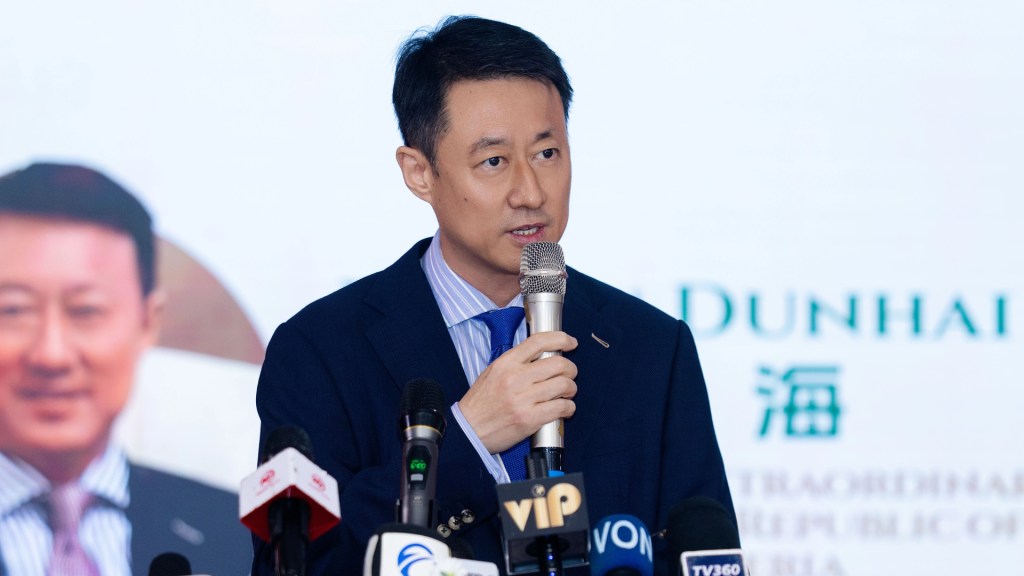
In his remarks, Chinese Ambassador to Nigeria Yu Dunhai described literature and film as important mediums for recording history, reflecting social change and promoting mutual understanding among nations.
He cited Nigerian writers including Wole Soyinka, Chinua Achebe and Chimamanda Ngozi Adichie, as well as Chinese authors such as Mo Yan, Yu Hua and Mai Jia, as examples of how literature can reflect society, culture and people’s experiences.
Yu also noted that translated literary works have helped readers in both countries gain a deeper understanding of each other’s societies and cultures.
Turning to film, Yu highlighted the scale of the two countries’ industries. China produces more than 700 films annually and has over 93,000 cinema screens, while Nigeria’s Nollywood is widely regarded as one of the world’s most prolific film industries, producing more than 2,000 films each year.
“The content exchange cooperation agreement between China Movie Channel and NTA will provide an important platform for people in both countries to deepen mutual understanding and friendship,” Yu said.
He added that closer cooperation in film and television would enable both countries to share their stories with wider audiences, create opportunities for industry professionals and showcase their distinct cultural identities.
Abdulkarim Ozi Ibrahim, Permanent Secretary of Nigeria’s Federal Ministry of Art, Culture, Tourism and the Creative Economy, said the partnership reflected the growing cultural ties between Nigeria and China.
He said the cooperation aligned with Nigeria’s efforts to develop the creative economy as an important driver of economic growth, job creation and national development.
“As Nigeria continues to implement policies aimed at unlocking the immense potential of the creative and cultural industries, partnerships such as this are timely, vital and invaluable,” Ibrahim said.
Guan Hong, Deputy General Manager of China International Press and Media Co. Ltd, said the symposium was aimed at translating mutual appreciation between the two countries into practical cooperation.
“Today, we gather with a shared aspiration to translate the mutual appreciation between our civilizations into tangible cooperation,” Guan said.
She said the programme was structured around three interconnected components: film screenings as a prelude, academic dialogue at its core, and cultural experiences as an extension.
Guan said she hoped the event would lead to deeper practical cooperation between China and Nigeria in film co-production, literary exchanges and cultural dialogue.
Salihu Abdulhamid Dembos, Director-General of the Nigerian Television Authority, said the agreement marked a new chapter in cooperation between the two institutions and in the broader cultural relationship between Nigeria and China.
“This event represents much more than the formal signing of a document. It marks the beginning of a promising new chapter in the enduring relationship between Nigeria and China,” Dembos said.
He said the partnership would support content co-production, programme exchanges, professional training, technology transfer and the wider distribution of Nigerian and Chinese creative works.
For NTA, he added, the agreement is consistent with the broadcaster’s ongoing digital and institutional transformation and its commitment to telling authentic Nigerian and African stories.
“We regard this agreement not merely as an institutional partnership, but as a bridge between two great civilizations,” Dembos said. “We must ensure that it produces practical and measurable outcomes.”
He added: “Together, we can tell stories that educate, inspire and entertain stories that cross borders, strengthen friendship and contribute to greater understanding and stronger cultural ties among nations.”
Cui Binzhen, Editor-in-Chief of the China Movie Channel Programme Centre, said the channel has introduced and broadcast more than 10,000 films from around the world over the past 30 years.
Cui said China Movie Channel would use the agreement as an opportunity to deepen film and television exchanges with Nigeria and promote stories that reflect cooperation between the two countries.
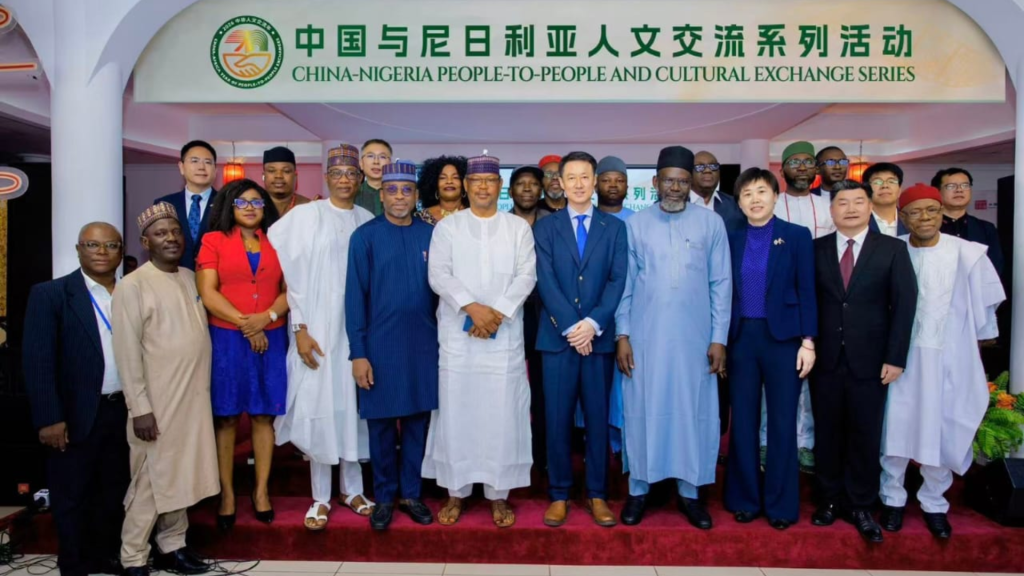
The symposium brought together government officials, diplomats, broadcasters, scholars, writers, filmmakers and representatives of the cultural and creative industries from both countries. It also featured discussions on storytelling, film production and talent exchanges, as well as a screening of the Chinese film Blades of the Guardians.